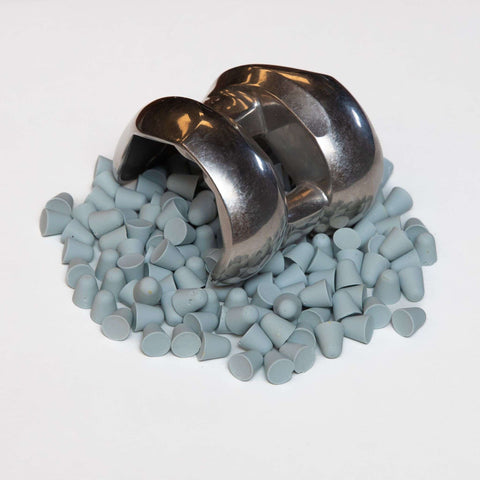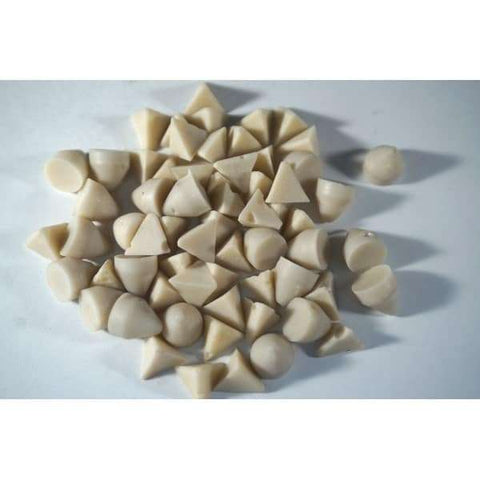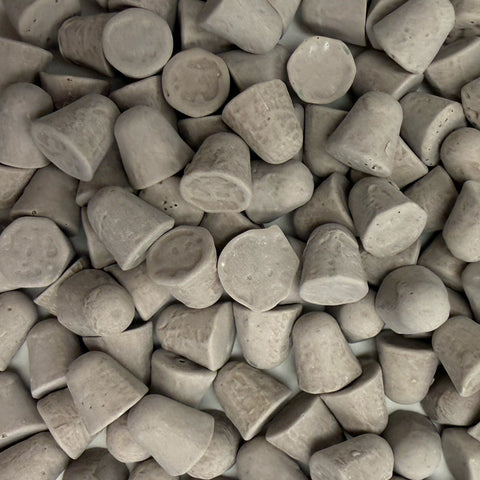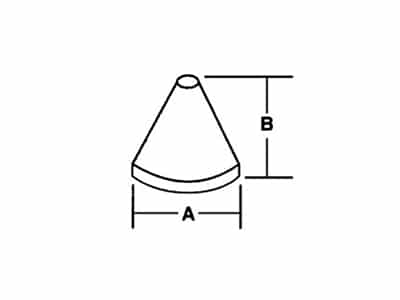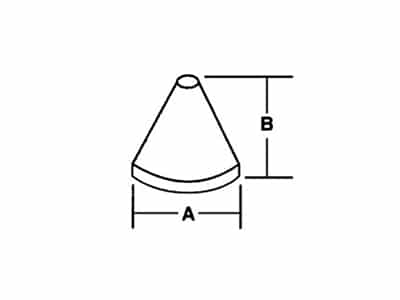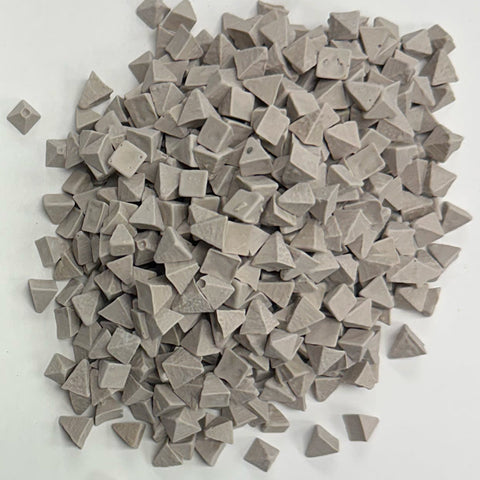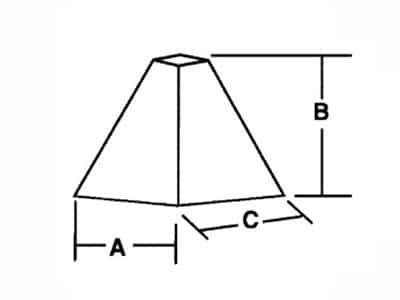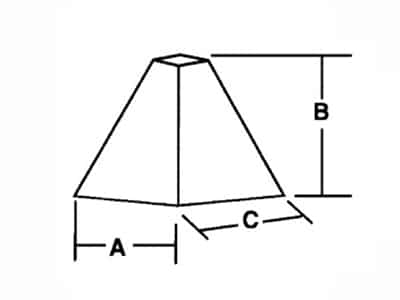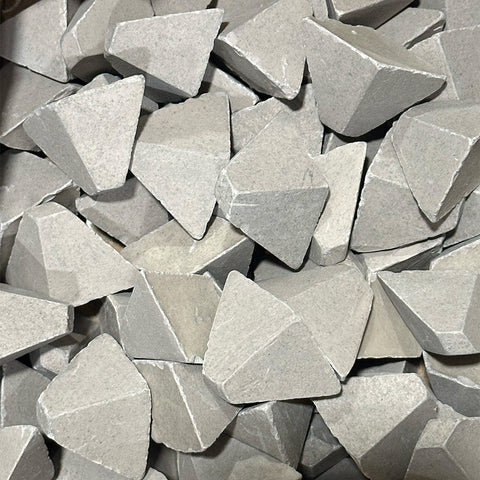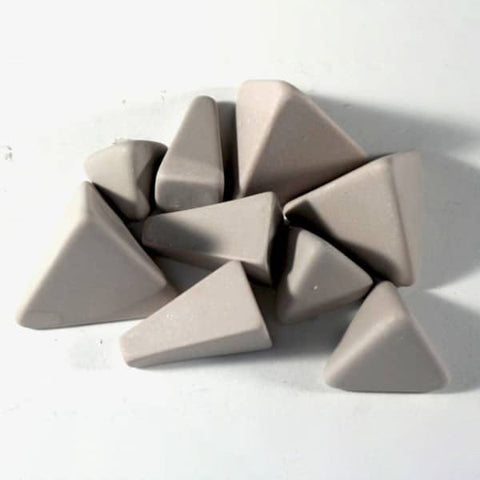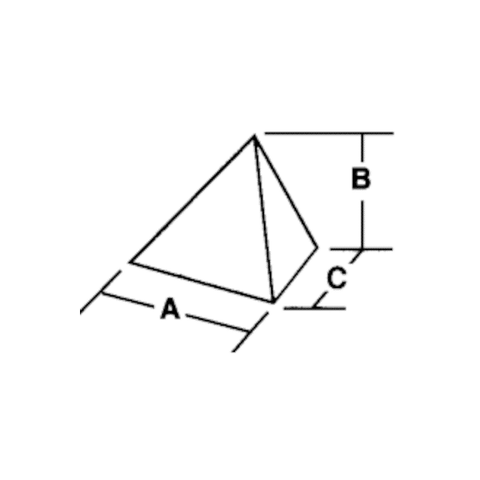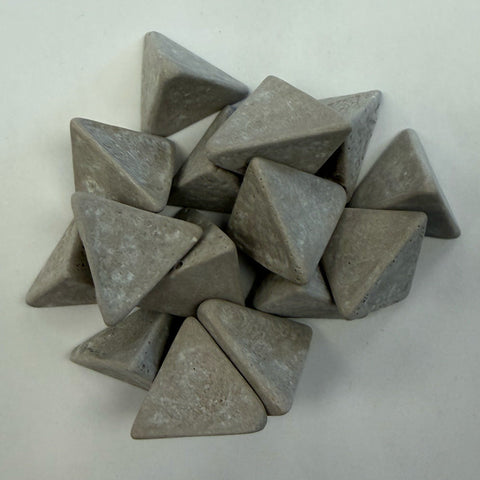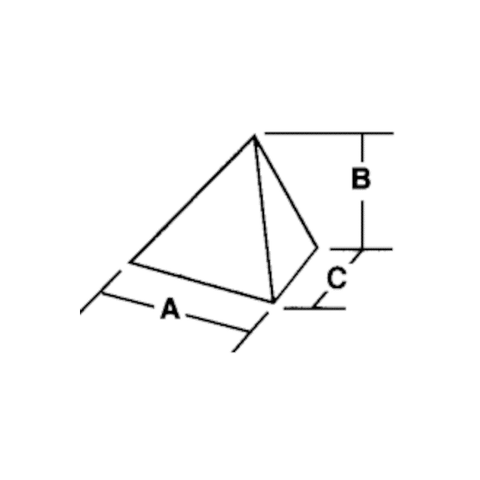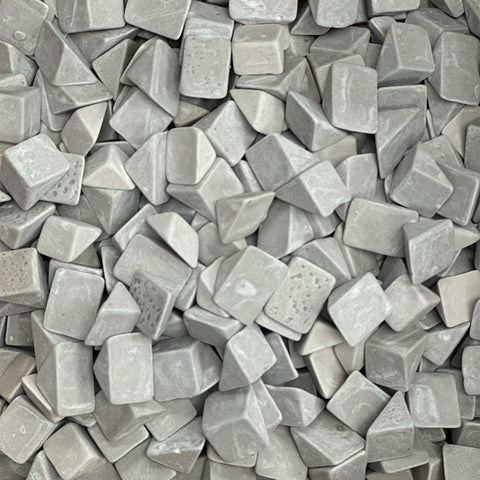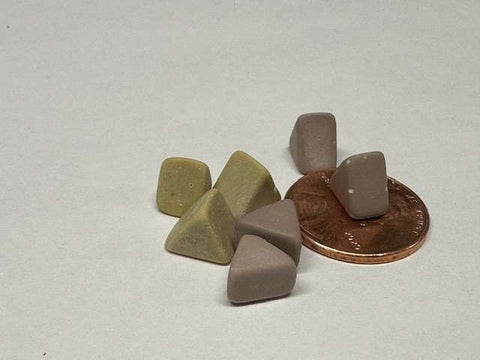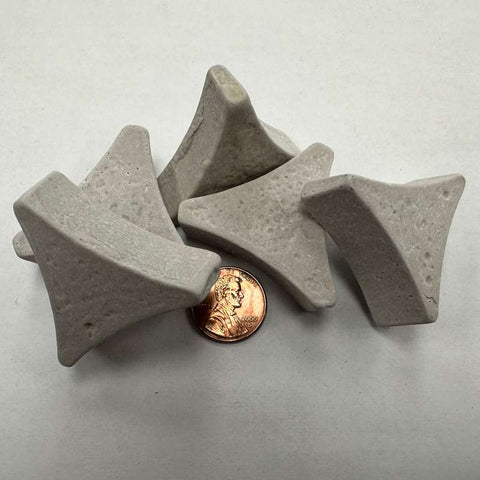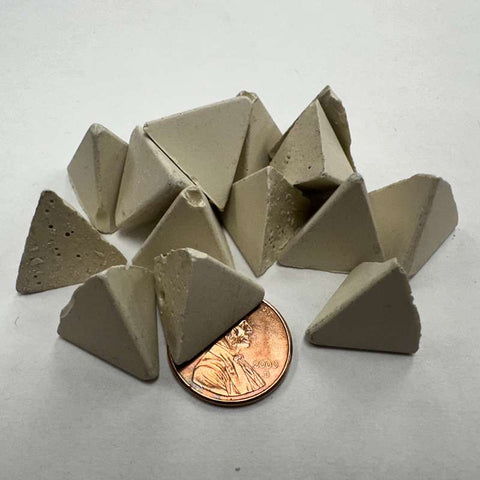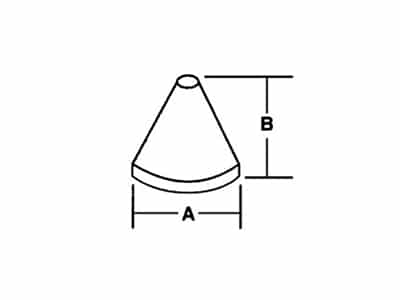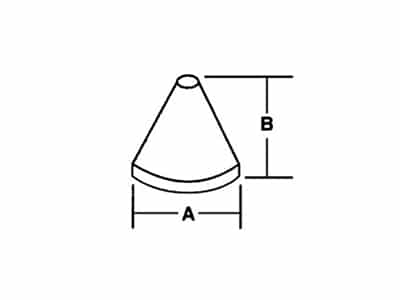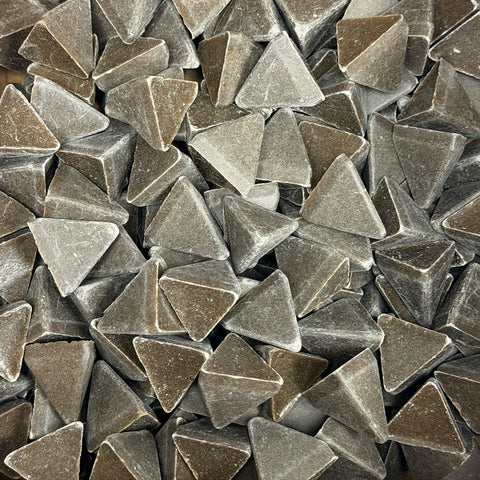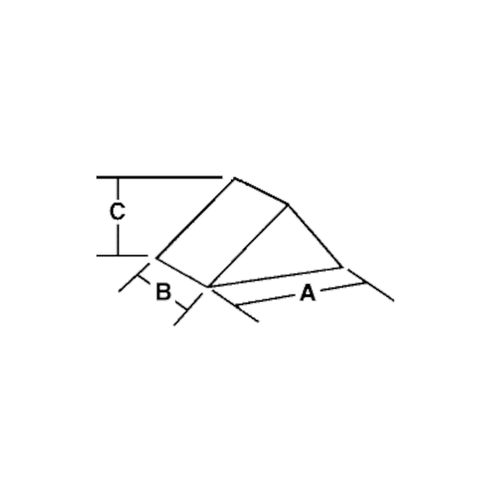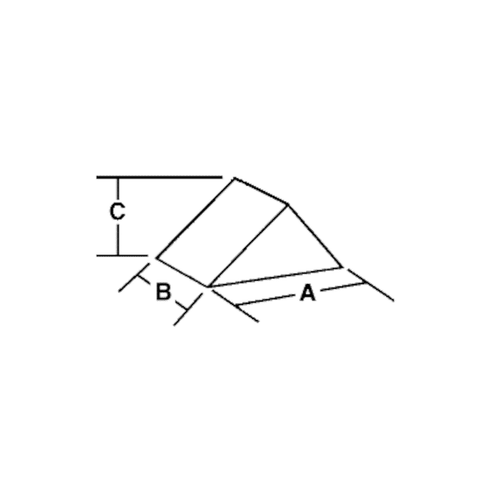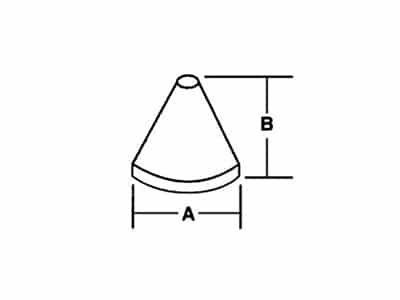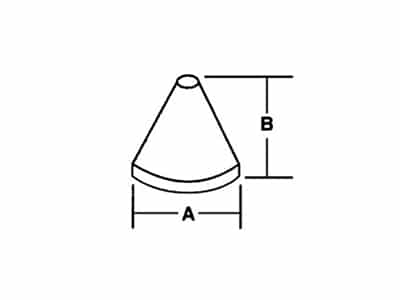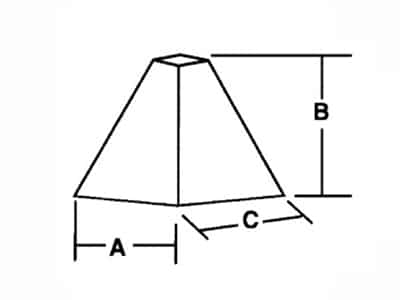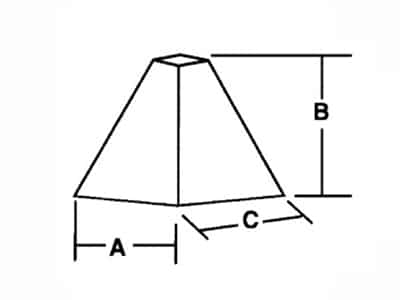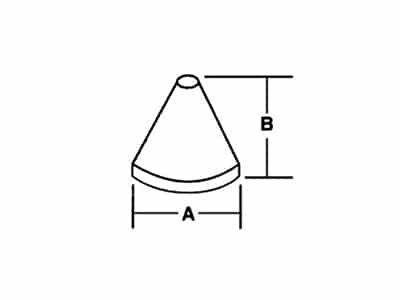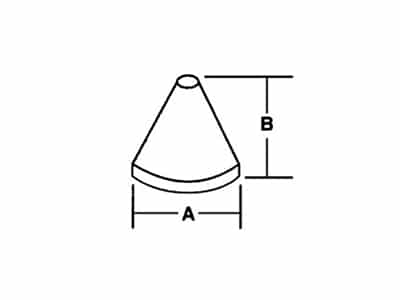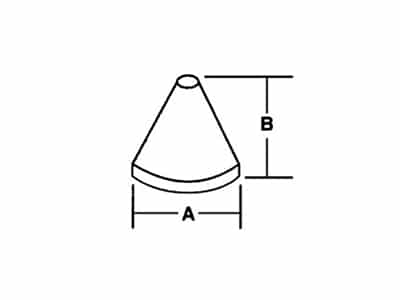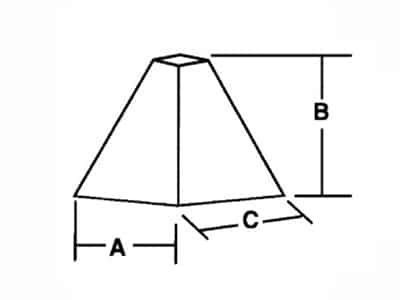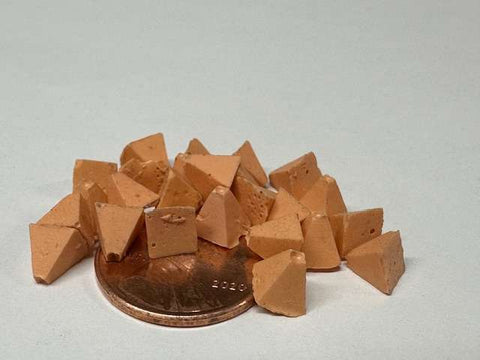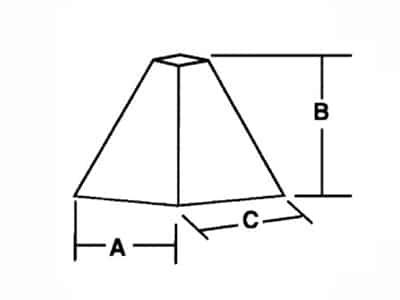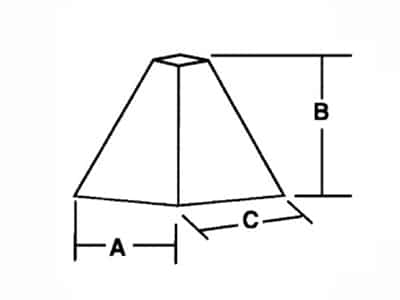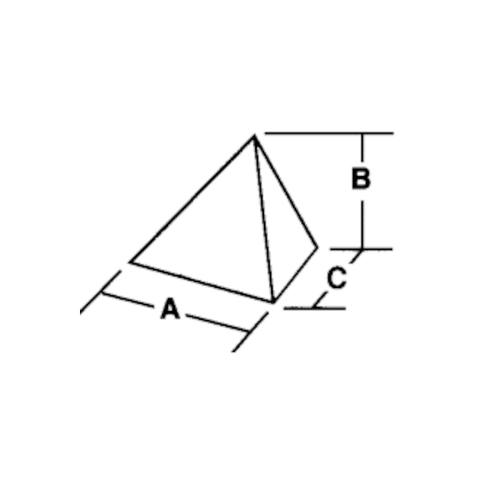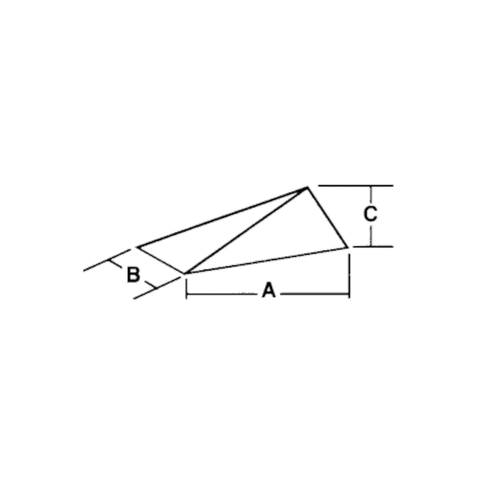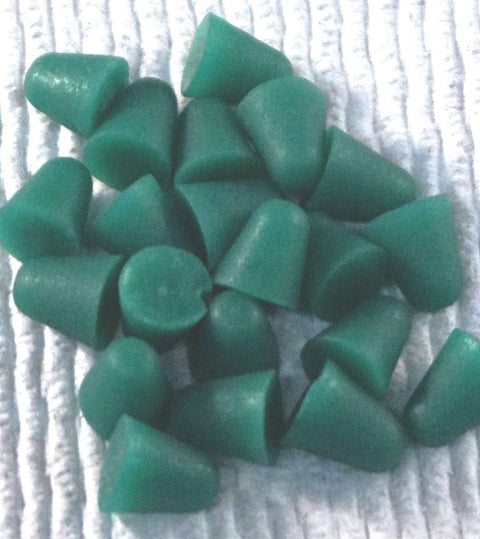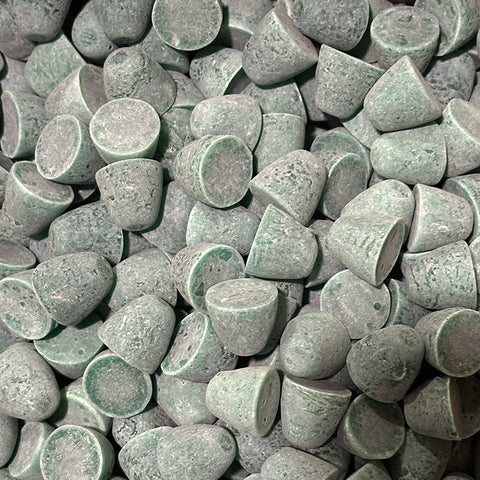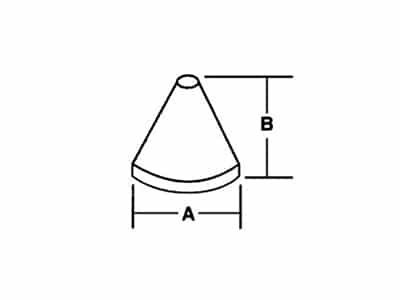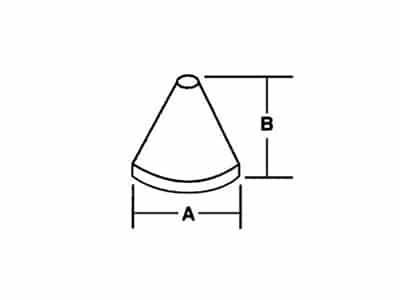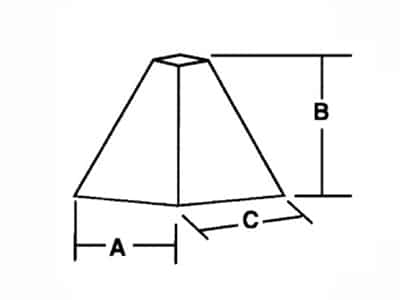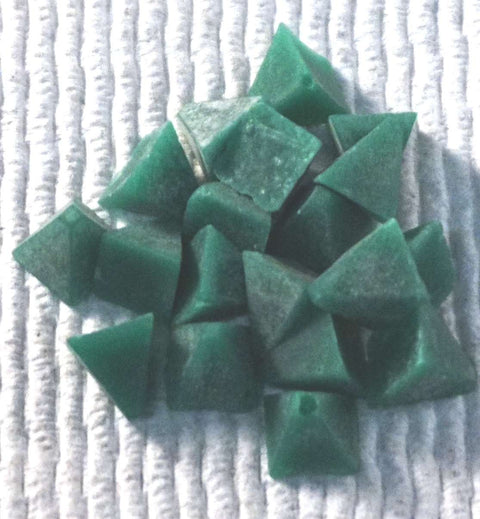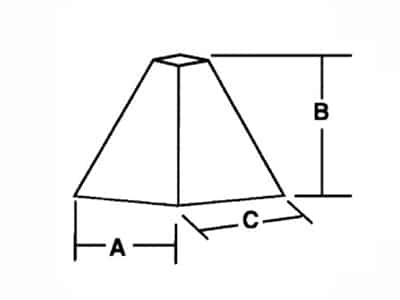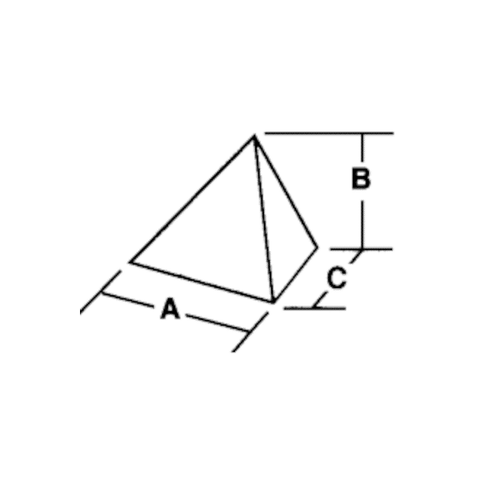
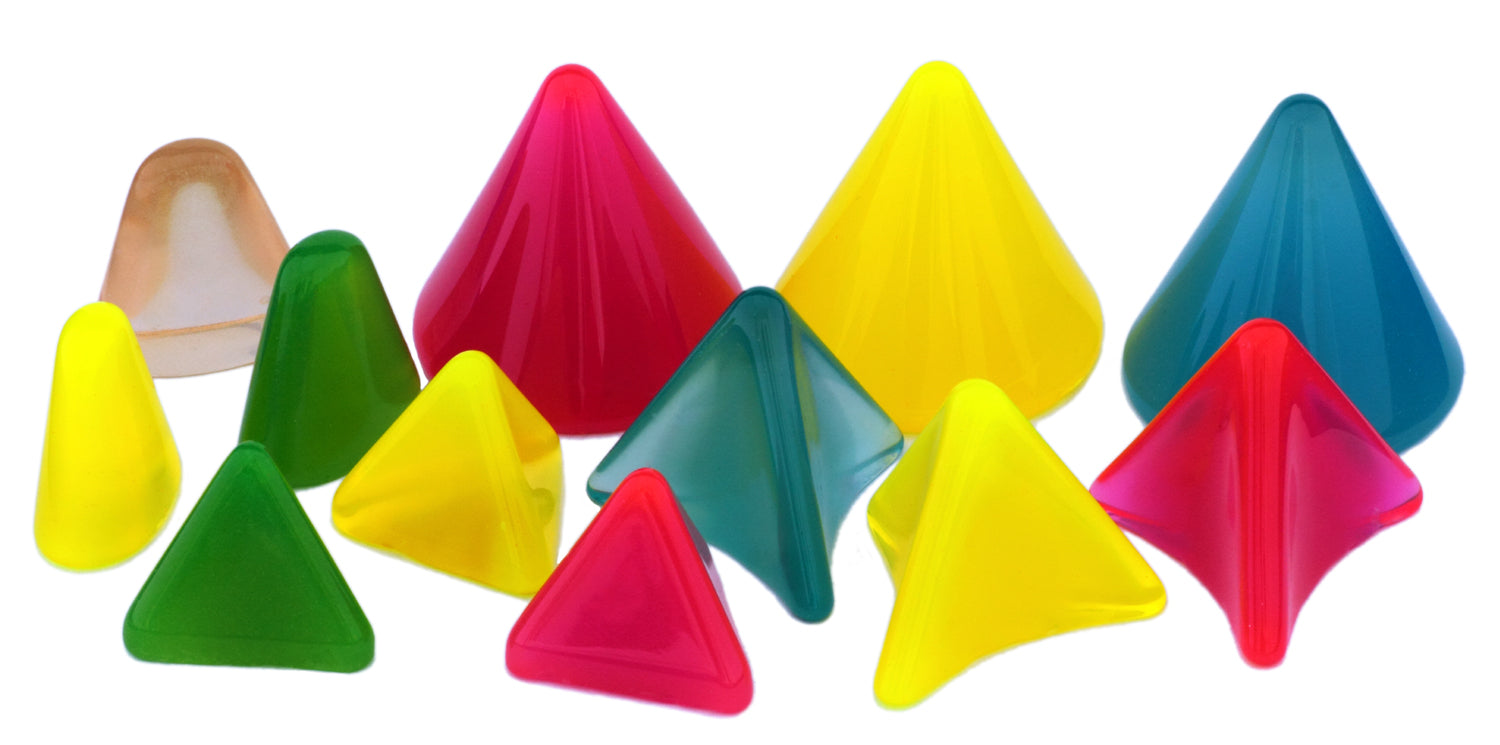
Colorful plastic tumbling media — wedge and pyramid shapes for vibratory finishing
Polar Finishing · Tumbling Media

Plastic Tumbling Media

Precision-formulated for deburring, polishing, and surface preparation of soft metals and plastics — with reduced distortion and no impingement.

All Tumbling Media

Reduced Distortion

Lower mass prevents impingement and edge deformation on delicate parts

Fine Pre-Plate Finishes

Achieves low Ra values ideal for electroplating and anodizing prep

30+ Shapes & Sizes

Versatile shape options accommodate diverse part geometries and features

High-Density Option

Up to 50% faster cycle times vs. standard ceramic while protecting surfaces

Plastic tumbling media manufactured to precise specifications using the finest raw materials. Used for surface preparation and improvement on aluminum, brass, copper, zinc, and plastic parts. Reduces distortion, impingement, and burr roll-over while producing excellent finishes prior to plating or painting. Available in low density, high density, synthetic, and dry eco options.

Products Coming Soon

We're adding products to this collection. Browse all tumbling media options in the meantime.
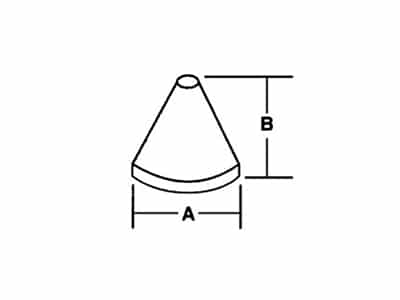
View All Tumbling Media

Typical Applications

  • Deburring CNC-machined and die-cast components
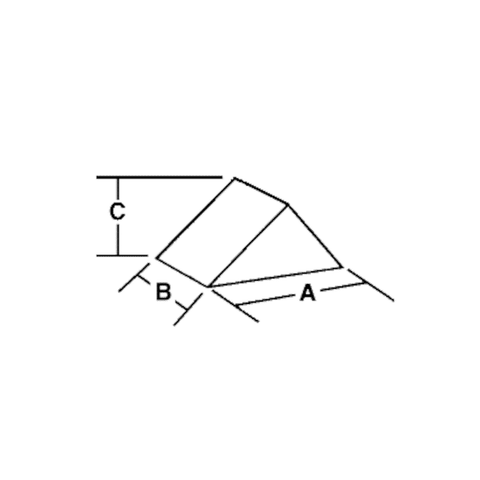
  • Pre-plate finishing for electroplating and chrome
  • Pre-anodizing surface preparation on aluminum
  • Pre-paint processing of plastic housings
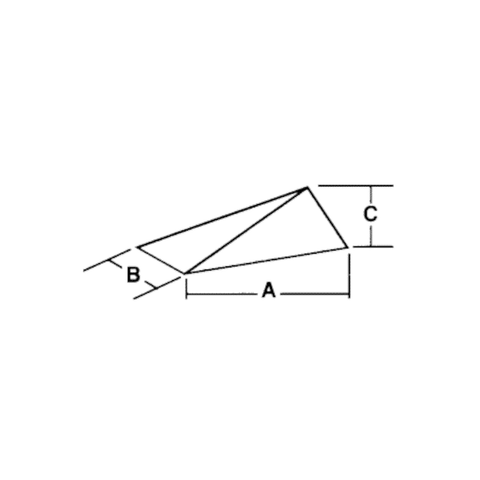
  • Deflashing molded plastic parts
  • Polishing precision surgical instruments and implants
  • Surface blending on aerospace fasteners and turbine blades
  • Edge radiusing on thin-walled soft metal parts

Compatible Materials

  • Aluminum (die-cast and machined)
  • Brass and copper alloys
  • Zinc alloys
  • Non-ferrous metals
  • Molded and machined plastics
  • Stainless steel & titanium (high-density grades)
  • Nickel alloys (high-density grades)
  • Precious metals — gold, silver

Frequently Asked Questions

Plastic media provides a balance between effectiveness and part protection, making it ideal for softer metals (aluminum, brass, zinc, copper) and plastic components. It excels in pre-plate finishing, deburring die-cast parts, smoothing molded plastics before painting, and preparing surfaces for anodizing. Its lighter mass prevents impingement, edge damage, and dimensional distortion that heavier ceramic media can cause.
Plastic media is significantly lighter and gentler than ceramic. This makes it the preferred choice for soft metals like aluminum, brass, and zinc where minimal dimensional change is critical. Ceramic is more aggressive and better suited for hard metals (stainless steel, titanium, tool steel). High-density plastic media bridges the gap — it can match ceramic cutting rates without the surface peening or excessive edge rounding that ceramic can cause on softer materials.
High-density plastic media is a hybrid combining polyester resins with ceramic fillers, achieving ~95–100 lbs/ft³ density compared to standard plastic at ~60–75 lbs/ft³. It's formulated for harder metals like stainless steel, titanium, and nickel alloys where standard plastic lacks cutting power but ceramic causes unacceptable surface effects. It can reduce cycle times by up to 50% while maintaining surface integrity — a critical advantage in aerospace, medical, and defense applications.
Synthetic media uses a urea formaldehyde resin binder with microcrystalline silica. Its acidic pH (~3) enables micro-cutting action excellent for pre-plate surface preparation. Key advantages: virtually no surface residue, excellent stability in high-speed centrifugal systems, and clean non-foaming operation. Important: the acidic pH requires corrosion inhibitors when processing copper, brass, or other non-ferrous metals. Do not freeze synthetic media in storage.
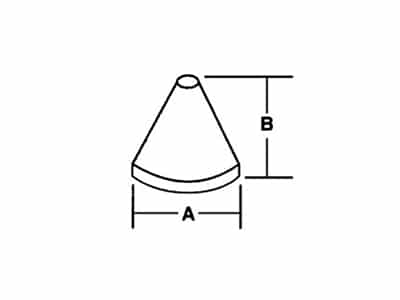
Shape selection depends primarily on part geometry. Cones are the most versatile, providing uniform finishing on all surfaces except inside corners. Angle-cut triangles and tristars penetrate remote areas like gear teeth and slots. Cylinders work well on flat and concave surfaces. The golden rule for sizing: choose media that cannot lodge inside holes, slots, or recesses in your part. Smaller media (1/8"–1/4") suits precision parts with fine features; larger sizes handle general deburring. Contact us with your part details for a specific recommendation.
Yes — plastic media is one of the best choices for pre-anodizing aluminum preparation. It produces clean, uniform, burr-free surfaces required for even anodizing coverage and consistent dye uptake. Unlike abrasive ceramic media, plastic is far less likely to embed particles into the aluminum surface or alter surface chemistry. Grades R-600 and R-650 are commonly specified for aluminum pre-anodize work, followed by a thorough rinse cycle before the anodizing bath.