


Finished Part
3D-Printed Foam Shoe
Smoothed surface and softened layer-line texture.



Compact, production-ready batch bowls with durable urethane construction and controlled spiral media flow. Ideal for mixed parts, short runs, and processes that benefit from operator inspection between cycles.
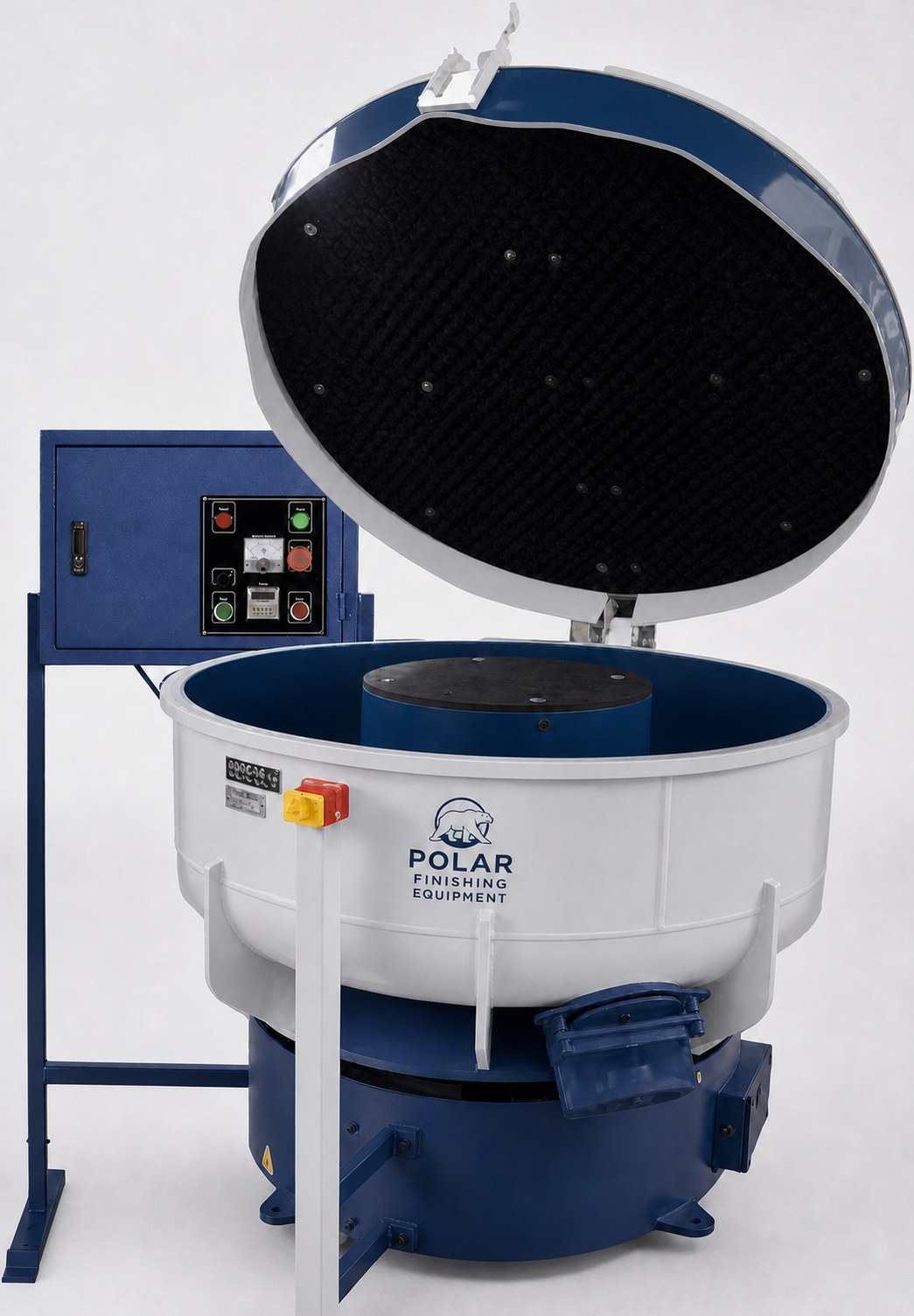
Polar batch vibratory bowls provide flexible manual-unload finishing for mixed parts, short runs, and production workflows that benefit from inspection between cycles. Durable urethane construction and controlled spiral media flow support deburring, radiusing, cleaning, polishing, and burnishing.
Available models
Configure the machine around ceramic, plastic, porcelain, or steel media, wet compound requirements, and the target finish. Built to order; freight quoted separately.
Representative results depend on part geometry, material, media, compound, and cycle settings.
Smoothed surface and softened layer-line texture.

Deburred edges with a clean, uniform surface.

Cleaned and deburred steel surface.

Polished machined receiver with consistent edge finishing.

Finished aluminum with an even production-ready surface.

Polished titanium surfaces and softened support marks.
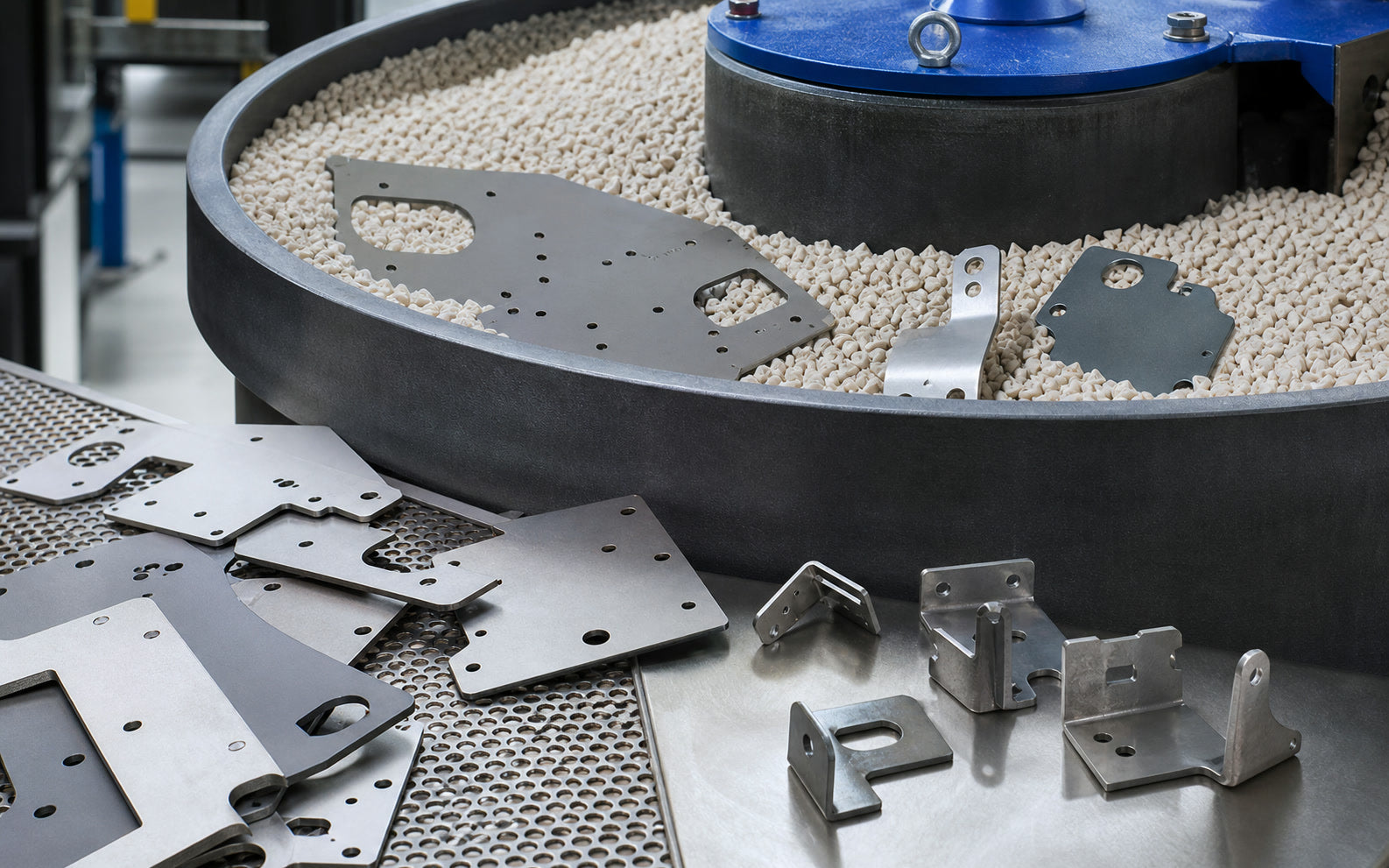
Remove burrs and soften edges on CNC-machined components.
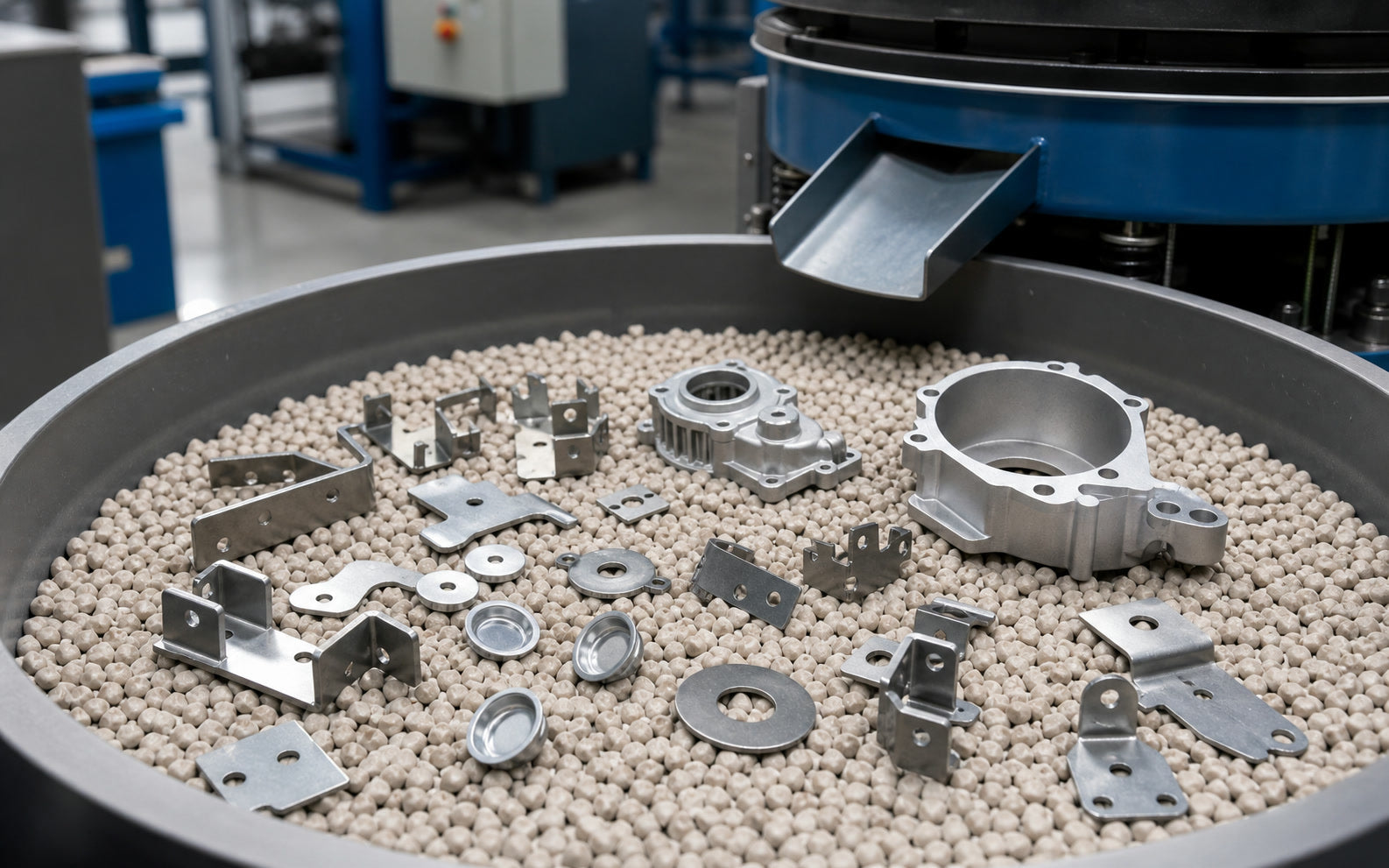
Condition flash, sharp edges, and surface scale before downstream operations.
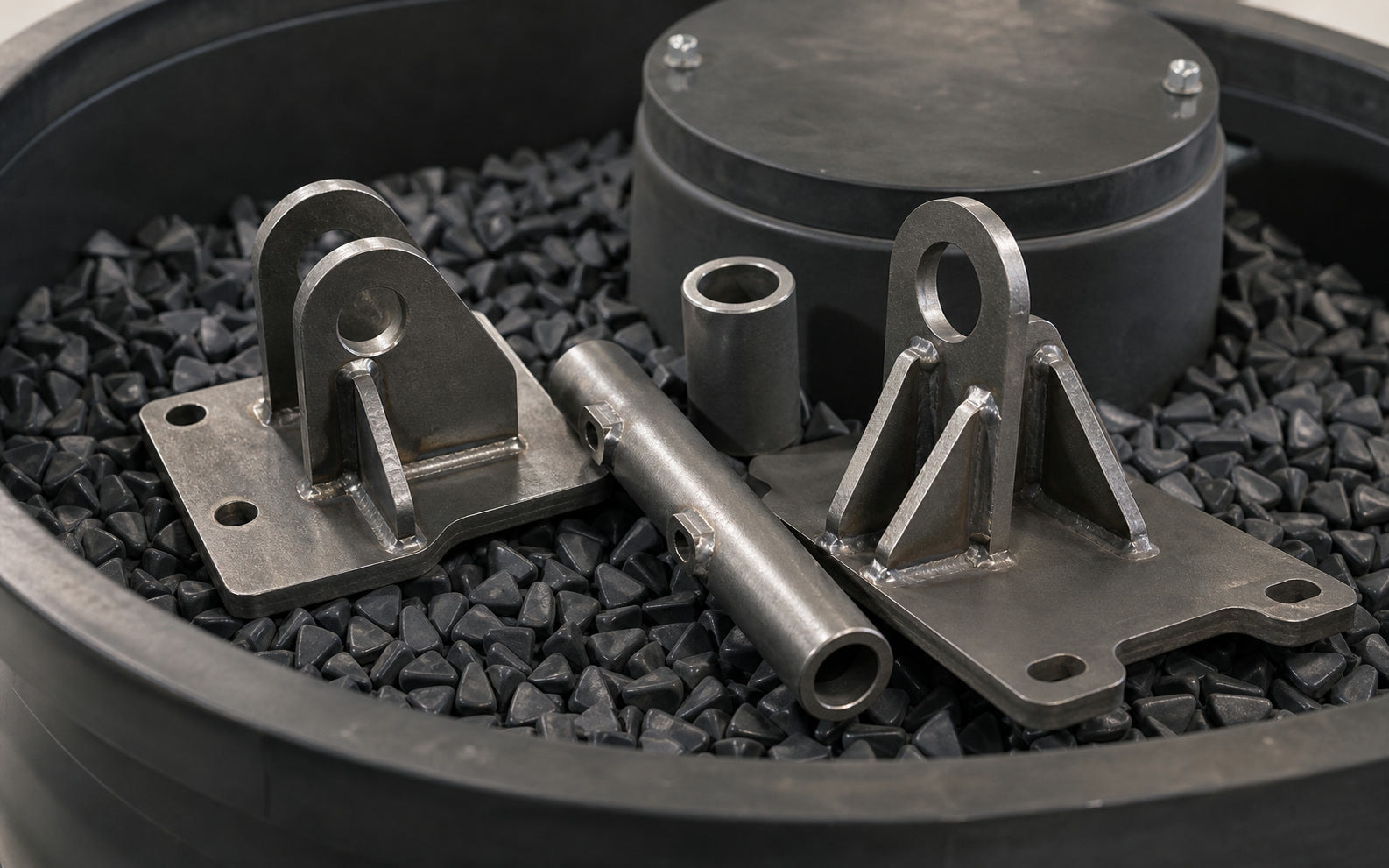
Improve surface appearance using the correct media, compound, and cycle.
Plastic, ceramic, and steel media matched to your parts and required surface finish. Compound dosing systems and replacement items also available.
Shop Tumbling Media & Accessories
Polar batch vibratory bowls provide controlled media flow for deburring, edge radiusing, cleaning, polishing, burnishing, and pre-coating preparation. Their flexible manual-unload workflow suits mixed part families, shorter production runs, and applications that require inspection between cycles.
Machinist's Vault can help select the bowl capacity, ceramic or plastic media, compound, and process settings based on your alloy, geometry, starting condition, and desired finish.
Choose a batch bowl for changing part families, shorter runs, lower throughput, or when operators need to inspect parts between cycles. Internal separation is better for recurring high-volume production with automated part discharge.
Yes, subject to the machine configuration and application. We recommend media material, shape, size, and grade after reviewing the part alloy and target finish.
Cycle time varies with part material, burr size, media aggressiveness, compound, amplitude, and finish target. Representative part testing is the best way to establish a production cycle.
North America’s source for OEM-compatible laser consumables, press brake tooling, and industrial parts — same machine, fraction of the cost.